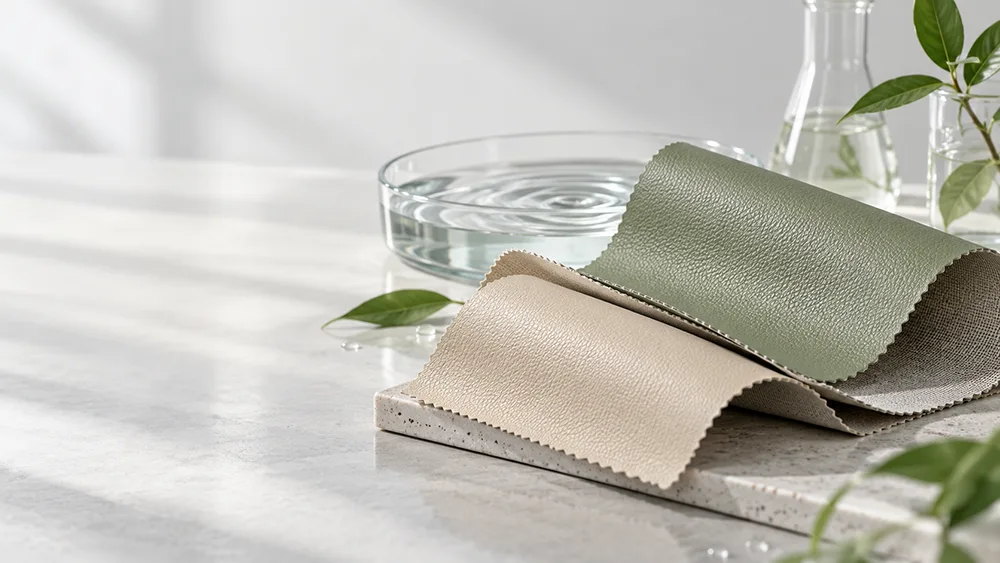
Synthetic leather is a coated textile designed to deliver a specific colour, texture and set of technical properties. It is used across footwear, bags, furniture, automotive interiors and many other applications. Choosing the right material requires more than comparing appearance: frequency of use, abrasion, flexibility, cleaning, environmental conditions and technical requirements must all be considered.
What is PU synthetic leather?
PU synthetic leather uses polyurethane in its surface coating. It can be suited to applications that require a soft touch, flexibility and a wide range of design options. Different grains, gloss levels and colours allow PU materials to be adapted for fashion, upholstery, automotive and other uses.
Performance depends on more than the coating type. The backing textile, layer structure, surface treatment and intended service conditions also influence the finished material.
What is PVC synthetic leather?
PVC synthetic leather has a polyvinyl chloride-based coating. Depending on its construction, it can offer durability, surface resistance and practical maintenance. It is used in upholstery, bags, footwear, accessories and various technical textile applications.
There is no single answer to whether PVC or PU is the better choice. The operating environment, expected level of contact, flexibility needs and project specification should guide the decision.
What is water-based synthetic leather?
Water-based synthetic leather uses water-based polyurethane technology in the coating system as an alternative to conventional organic-solvent-based processes. The approach is designed to reduce solvent use while meeting the required performance and design criteria.
Gezderi develops water-based synthetic leather solutions for the aesthetic and technical requirements of different industries. The term “water-based” should not be assessed in isolation: the relevant technical data sheet, intended application and care conditions must also be reviewed.
How should you choose between PU, PVC and water-based synthetic leather?
Start by defining the actual use case. A high-traffic seat and a fashion accessory do not have the same flexibility or surface-performance requirements. Automotive interiors may prioritise temperature variation, abrasion and cleanability, while outdoor applications may require verified resistance to light and weather conditions.
Ask the following questions before selecting a material:
- Where and how frequently will the product be used?
- What level of abrasion and rubbing is expected?
- What flexibility, touch and surface appearance are required?
- Are flame-retardant or antimicrobial properties needed?
- Does an industry standard or customer specification apply?
- Is the proposed cleaning method compatible with the material?
Gezderi develops PVC/PU synthetic leather and polymer-coated fabrics for multiple industries. Reviewing a physical sample together with current technical documents is the most reliable way to identify a suitable material for a project.
Frequently asked questions
Are faux leather, artificial leather and synthetic leather the same?
In everyday and commercial use, these terms often refer to the same broad material category. A technical specification should also identify the coating chemistry, backing textile and layer construction.
Which type of synthetic leather is the most durable?
Durability cannot be determined from the terms PU or PVC alone. Abrasion, flexing, rubbing, cracking and service-condition test results should be assessed together.
Is a physical sample necessary when choosing synthetic leather?
Yes. Colour, grain, touch and processing suitability should be assessed on a physical sample, while technical suitability should be confirmed through current data sheets and relevant test results.